Resources for Supporting a Loved One With Complex PTSD
If you have a spouse, friend, or loved one with complex trauma, you may already be familiar with the basics.
Complex PTSD (CPTSD) is caused by ongoing or repeated trauma. It’s gained more attention in recent years, and rightfully so. People with CPTSD endure additional symptoms that differentiate it from typical PTSD. Additionally, CPTSD symptoms tend to be more severe.
CPTSD can cause challenges with interpersonal relationships, self-esteem, functionality at work, school, at home, and in other parts of life. However, both relationships and families can heal from CPTSD and its effects.
If someone close to you has complex trauma, you can fill a valuable role as part of their support system.
Developing a better understanding of the condition matters. So, what should you know if you want to support a loved one with complex PTSD?
We’re here to help. Icarus Wellness and Recovery provides effective CPTSD treatment in Idaho, involving loved ones in the treatment process whenever possible.
Get Confidential Trauma and PTSD Assessment
Learning How to Support Someone With CPTSD
Whether you have a romantic partner, friend, or family member with CPTSD, there are healthy ways to support them.
Before we cover what to do in more specific situations, here are three things anyone with a trauma survivor in their life can benefit from.
Learn About Trauma Triggers and Reactions
Everyone with CPTSD is different. Your loved one will have triggers that are unique to them. Generally speaking, CPTSD triggers fall into one of the two categories:
- External reminders. People, places, or things (e.g., scents, sounds, objects, or situations).
- Internal reminders (e.g., emotions, thoughts, or dynamics related to the event).
This could mean that a loved one is triggered by certain locations. It could also mean that feeling anger, powerlessness, guilt, or shame is a trigger. One of the most critical things to remember about trauma triggers is that they might not always make sense to others.
Even if a person with CPTSD knows that they are not unsafe, triggers can cause the person’s brain and body to identify a perceived lack of safety. What they are experiencing is very real. Focus on the feeling rather than the cause.
Use Active Listening Skills
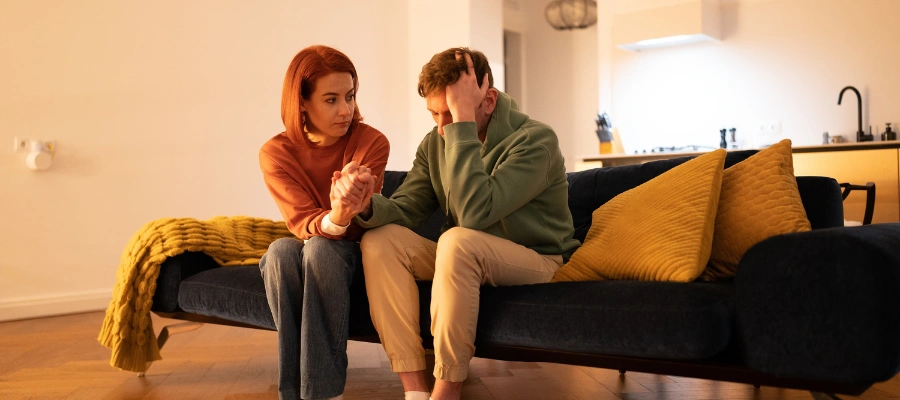
Active listening is a communication technique that involves consciously focusing on, understanding, and responding to what a person says.
Essential aspects of actively listening include:
- Give the speaker your undivided attention.
- Listening to comprehend (not just respond).
- Paraphrasing (repeating back the main points of what a person said).
- Verbal and non-verbal cues (e.g., nodding, saying “I see,” “yes,” “that makes sense,” etc.) that show you are listening.
- No interrupting (let the person finish speaking before you talk).
- Asking questions to make sure that you understand (e.g., “How did you feel in that situation?”)
- Being non-judgmental. Refrain from giving advice without asking. Do not say things like “you’re over-reacting.”
These techniques are essential for being a good listener. Learning about active listening can help you in everyday life–not just when supporting someone with CPTSD.
Provide Validation and Emotional Support
Validation is powerful for trauma survivors. It pairs with active listening. Many trauma survivors feel misunderstood.
Helping them feel heard can be healing. To validate your loved one, you might say things like:
- “That sounds difficult/painful/upsetting.”
- “Thank you for sharing this with me.”
- “It’s not your fault.”
When it comes to trauma responses, reactions like fear, anger, freezing up, or sadness are normal. Don’t try to fix the problem. Just being there to provide emotional support is the goal.
Responding to Your Loved One’s C PTSD Symptoms in the Moment

Many people close to someone with CPTSD don’t know what to do when triggers or symptoms emerge. Having strategies in your back pocket can be crucial. Here are some things you can do if your loved one is experiencing symptoms right now.
React and Respond Calmly
Remaining calm is one of the most vital things to do when a person with CPTSD is experiencing triggers or symptoms. Even if you don’t fully understand what is going on, keep a steady, calm tone of voice. More in-depth conversations are best saved for later.
Check in Regarding the Person’s Needs
One of the best ways to know how to support someone is to ask directly. Say, “Do you want to be alone, or do you need support right now?” Similarly, ask “Do you want someone to just listen, or do you want advice?” before giving input.
Trauma triggers can make it hard to think clearly. At times, simple “yes or no” questions are ideal. The person can respond by nodding or shaking their head, even if it’s difficult to speak.
Offer Helpful Strategies After Checking In
After checking in to make sure your loved one is up for it, you might offer helpful strategies. For example, breathing exercises, progressive muscle relaxation, or moving from a potentially overstimulating environment to a quieter space (e.g., outside, the car).
Checking in can be as straightforward as saying, “Do you want to try a grounding technique with me?” or “Do you think going outside would help?”
Get Accredited Treatment Programs at Icarus
Communication Tips for Discussing Traumatic Events and Triggers
How do you navigate talking with a loved one about distressing events? Inevitably, they will likely come up at some point. When they do, here are some tips that can help.
Get Permission Before Talking About Activating Subjects
Ask your loved one for permission before discussing traumatic topics or potential triggers. In some instances (e.g., right before work), it might be ideal to save heavy or activating conversations for later.
Do Something Soothing After You Talk
It can be heightening to discuss traumatic events and triggers. After the fact, calming activities can help the person’s nervous system wind down and feel safer.
Some effective examples our clients have shared include:
- Comforting movies and TV shows.
- Sensory items (e.g., weighted blankets, soft fabric, comforting beverages, like tea, soothing music, white noise).
- Nature walks.
- Board games.
- Crafts.
- Reading.
In partnerships, aftercare for potentially heightening conversations might include affirmations (e.g., “I love you”) or cuddling. Even for friends and family, reiterating positive things about the person can help them stabilize, especially if what you discuss relates to your relationship.
Create an Action Plan for Future Trauma Responses
Again, when actively triggered, a person’s ability to think clearly or respond can be compromised. When your loved one is at their baseline state, you may work together to create an action plan for what to do when trauma responses arise.
A Guide to CPTSD Symptoms for Loved Ones of Trauma Survivors

It can be extremely helpful for loved ones to know what CPTSD symptoms look like. That way, you will know what’s going on when the person in your life experiences them. Common CPTSD symptoms include:[1]
- A negative sense of self, which may involve feelings of guilt, hopelessness, failure, or worthlessness.
- Avoidance (avoiding external triggers or feelings associated with traumatic memories).
- Re-experiencing symptoms, such as flashbacks or nightmares.
- Difficulty forming or maintaining relationships.
- Frequent negative thoughts or emotions.
- Depression or emotional numbness.
- Hypervigilance (being on high alert).
- Trouble regulating emotions.
- Difficulty sleeping.
- Anxiety.
Many people with CPTSD also experience dissociative symptoms.[2] Dissociation refers to a sense of disconnection from oneself, others, the world, one’s feelings, or one’s body. It can range from mild to severe.
Participating in Therapy Sessions
A great way to support a loved one with mental health concerns like CPTSD is to participate in therapy sessions. Couples or family therapy can be highly advantageous, especially if a loved one’s in a treatment program or if you need help navigating CPTSD together.
If your loved one has an individual therapist, there might even be situations in which you can join them for a session. While this doesn’t replace ongoing family or couples therapy, it can provide some insight.
Icarus Wellness and Recovery encourages family involvement whenever possible. Family is broad in this instance and can include anyone close to the person, whether it’s immediate family, extended family, a partner, or someone else.
The Importance of Formal Treatment for CPTSD

Support from peers and loved ones is invaluable for those healing from complex trauma. It does not replace formal treatment. While both make a difference, they play distinct roles. Therapy helps people with CPTSD:
- Navigate triggers. Trauma therapists can help people reduce sensitivity to and find healthy ways to navigate CPTSD triggers.
- Reduce impacts on their mental and physical health. Emotional, psychological, and physical CPTSD symptoms can be painful and highly disruptive for the person experiencing them. Treatment can reduce these symptoms.
- Healthy relationships are possible for people with CPTSD. Although problems in relationships are common, people with CPTSD can and often do have supportive, thriving connections with others. Treatment provides the tools you need to take care of them.
People who receive effective treatment for CPTSD report improvements in quality of life. Some people no longer meet the criteria for CPTSD after treatment.[3]
Encouraging Professional Help for Mental Health
In some cases, a person with Complex PTSD may not have the professional support they need. Interdependence is the goal in interpersonal relationships, regardless of mental health diagnoses.
On the other side of that coin, you want to avoid co-dependence.
If your loved one has unmanaged CPTSD symptoms, you may offer to help them find treatment. While they may need to move at their own pace, it can be important to set boundaries. You should be one part of your loved one’s support system–not their entire support system.
Self-Care and Resources for Family Members and Loved Ones of Trauma Survivors
Don’t forget your own self-care. Family members and other loved ones of trauma survivors must remember to take care of their needs, both emotionally and physically. The impacts of trauma on loved ones can be heavy in some cases.
Support groups and therapy can help the loved ones of trauma survivors work through challenges, get support for their own emotions, and maintain a healthy lifestyle.
Call Icarus Wellness and Recovery for CPTSD Treatment and Support Options

Icarus Wellness and Recovery is a JCAHO-accredited addiction and mental health treatment center in Idaho. Our professionals provide effective, trauma-informed care for people from all walks of life.
We offer specialized inpatient and outpatient therapy programs for trauma survivors. All programs at our facility are covered by most insurance plans.
You are welcome to contact our center in Boise for yourself or a loved one. Call our admissions line today to get in touch. All calls are confidential, so please reach out for options and more information now.
Up To 100% of Rehab Costs Covered By Insurance
FAQs About How to Support Someone With CPTSD
What kinds of events can cause CPTSD?
Examples of events that can cause CPTSD include:
- Captivity or trafficking.
- Childhood abuse.
- Neglect.
- Domestic violence.
- War
This is not an extensive list. CPTSD can be caused by continuous or repeated trauma of any kind.
How to relax CPTSD?
CPTSD can make it hard to relax and unwind. Soothing activities, grounding techniques, and self-talk are some tactics you may find beneficial.
How to help complex trauma?
Trauma-focused therapies are the most effective methods of treating complex trauma.[4] Helping clients feel safe is an essential first step.
References
- Complex PTSD. Cleveland Clinic. (2025c, October 2).
- Sciencedirect.com | Science, Health and medical journals, full … (n.d.).
- Riedl, D., Thaler, J., Kirchhoff, C., Kampling, H., Kruse, J., Nolte, T., Campbell, C., Grote, V., Fischer, M. J., & Lampe, A. (2025). Long‐term improvements of complex post‐Traumatic Stress Disorder (CPTSD) symptoms after multimodal psychodynamic inpatient rehabilitation treatment–an observational single center pilot study. Journal of Clinical Psychology, 81(8), 739–754.
- Melton H;Meader N;Dale H;Wright K;Jones-Diette J;Temple M;Shah I;Lovell K;McMillan D;Churchill R;Barbui C;Gilbody S;Coventry P; (n.d.). Interventions for adults with a history of complex traumatic events: The incite mixed-methods systematic review. Health technology assessment (Winchester, England).