
A Journaling Worksheet for Trauma Timelines
Our downloadable trauma timeline worksheet offers space to note experiences, current concerns, and sources of support. It is an optional reflection aid for adults, not a test, a way to recover missing memories, or a proven treatment for PTSD.
At Icarus Wellness and Recovery, you can ask about an assessment and current treatment options. Discuss whether this handout fits your needs with a qualified mental health professional before using it to explore distressing memories.
You do not have to describe traumatic events in detail, complete every section, or finish the worksheet. If writing leaves you overwhelmed, disconnected from your surroundings, or less safe, stop and contact your clinician or a trusted support person.
This Icarus-branded handout is an informal educational resource. The sources below provide background on PTSD treatment and post-traumatic growth; they do not establish that this specific worksheet has been clinically validated. It does not replace professional care or create a clinician-client relationship.
Downloadable Trauma Timeline Worksheet Template PDF
The American Psychological Association’s 2025 PTSD guideline addresses treatments for adults. It does not endorse this downloadable worksheet. Treatment choices should reflect your history, preferences, and a clinician’s assessment.
The National Center for PTSD describes Written Exposure Therapy as a structured, clinician-delivered treatment with specific instructions. Completing a general timeline or journal at home is not the same intervention (Sloan & Marx, 2026).
Step 1: Prepare to Manage Traumatic Memories Through Grounding
Before you start the worksheet, take a few minutes to create a sense of safety. Grounding is the ability to stay tethered in the here and now, even if the past starts to pull you in.
You might choose to notice the room around you or the feeling of your feet on the floor. Use a grounding strategy that you and your clinician have found helpful. It is fine to leave the worksheet for another time.
Grounding is not guaranteed to stop distress, and it does not simply switch the brain from a “survival” area to a “logical” area. If symptoms persist or worsen, seek support rather than pushing through.
Step 2: Plot Traumatic Events on a Trauma Timeline
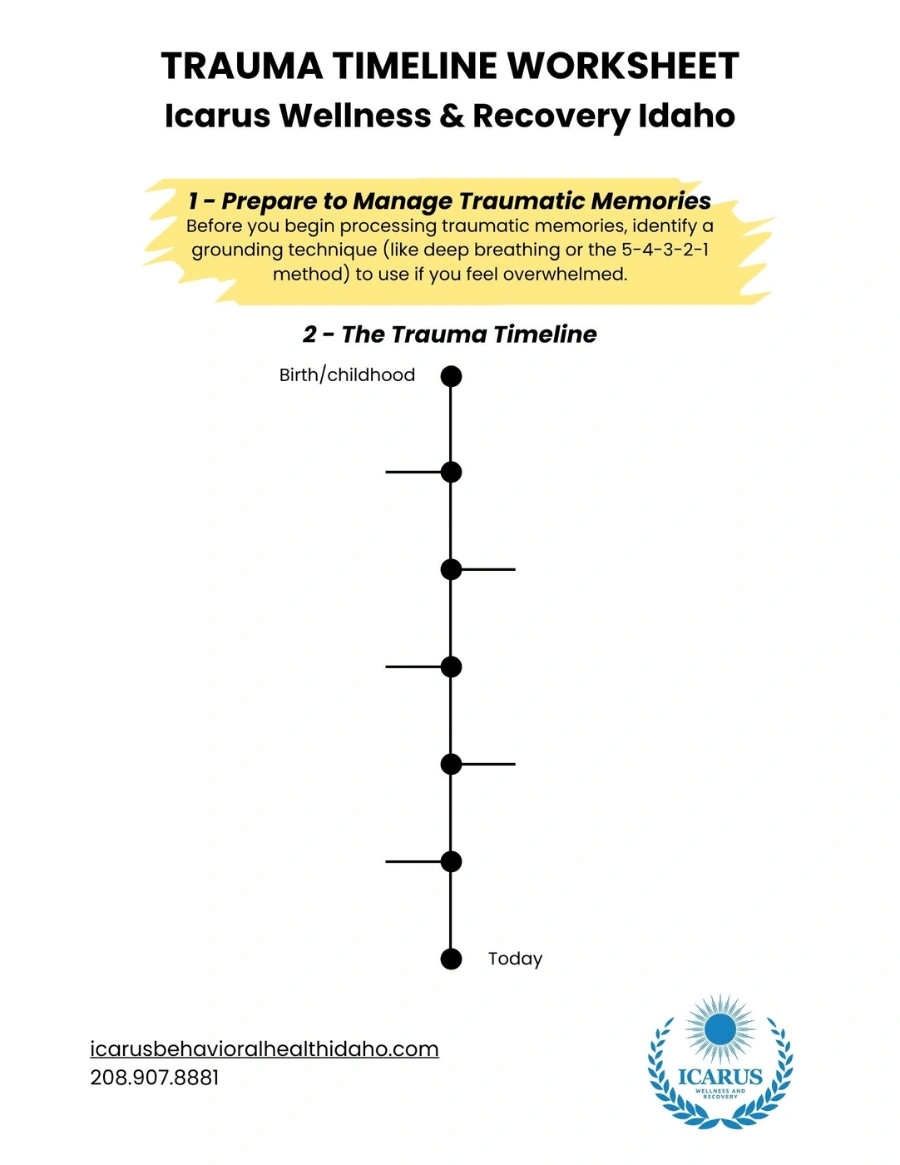
Use the line on page 1 only if you and your clinician decide it is useful. Brief labels and approximate dates are enough. You may include supportive events as well as difficult ones.
Record what you already remember without trying to fill gaps, guess details, or force a complete account. A timeline cannot verify whether an event happened. Leave uncertain details marked as uncertain.
There is no required number of events. Skip any prompt you do not want to answer, and print another page only if you choose to.
Step 3: Externalize the Past by Writing Your Trauma Narrative
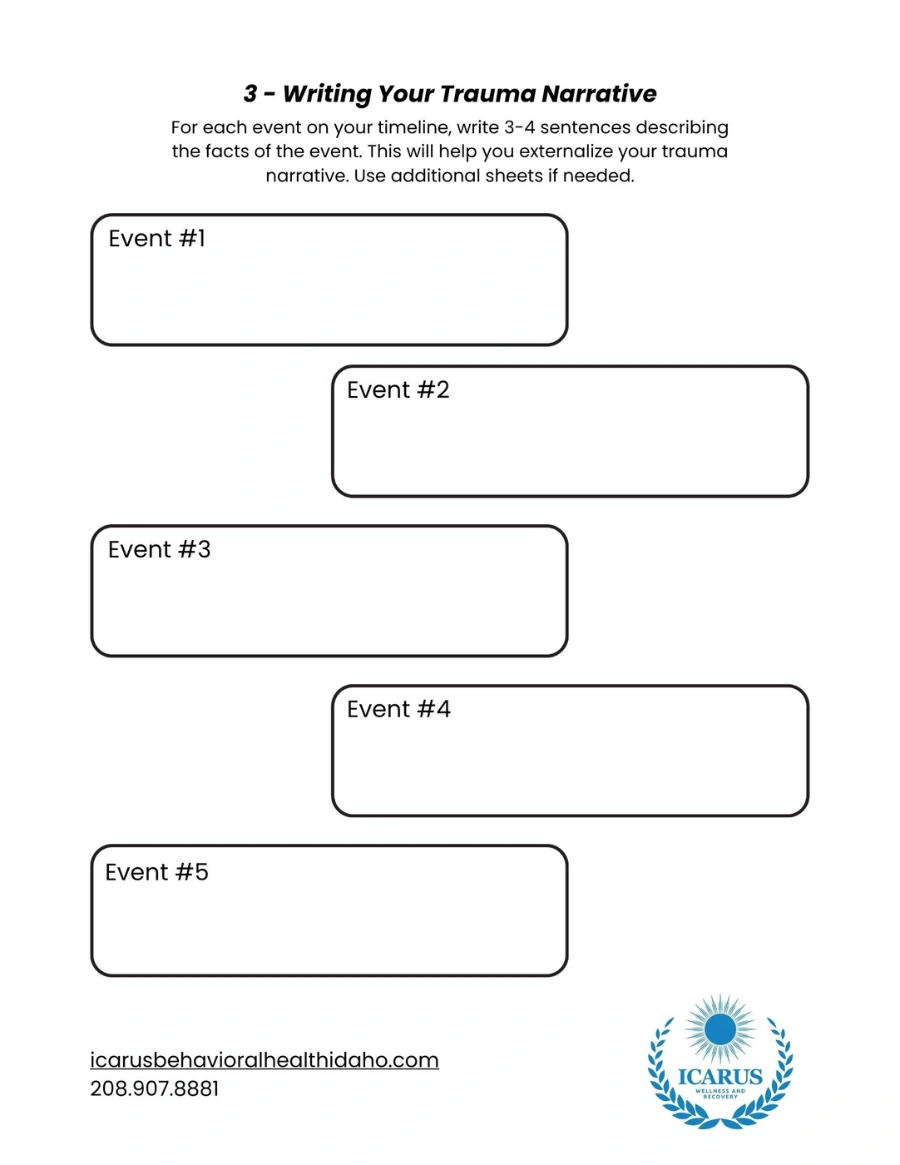
Writing about trauma can be distressing. Before beginning a detailed narrative, ask a qualified clinician whether it is appropriate for you and how it would fit into care. You do not need to write a detailed account to deserve help.
If you use this space, you may instead note what support you need now or questions for your next appointment. This optional reflection is not a substitute for a structured trauma-focused therapy.
Step 4: Notice Strengths and Sources of Support
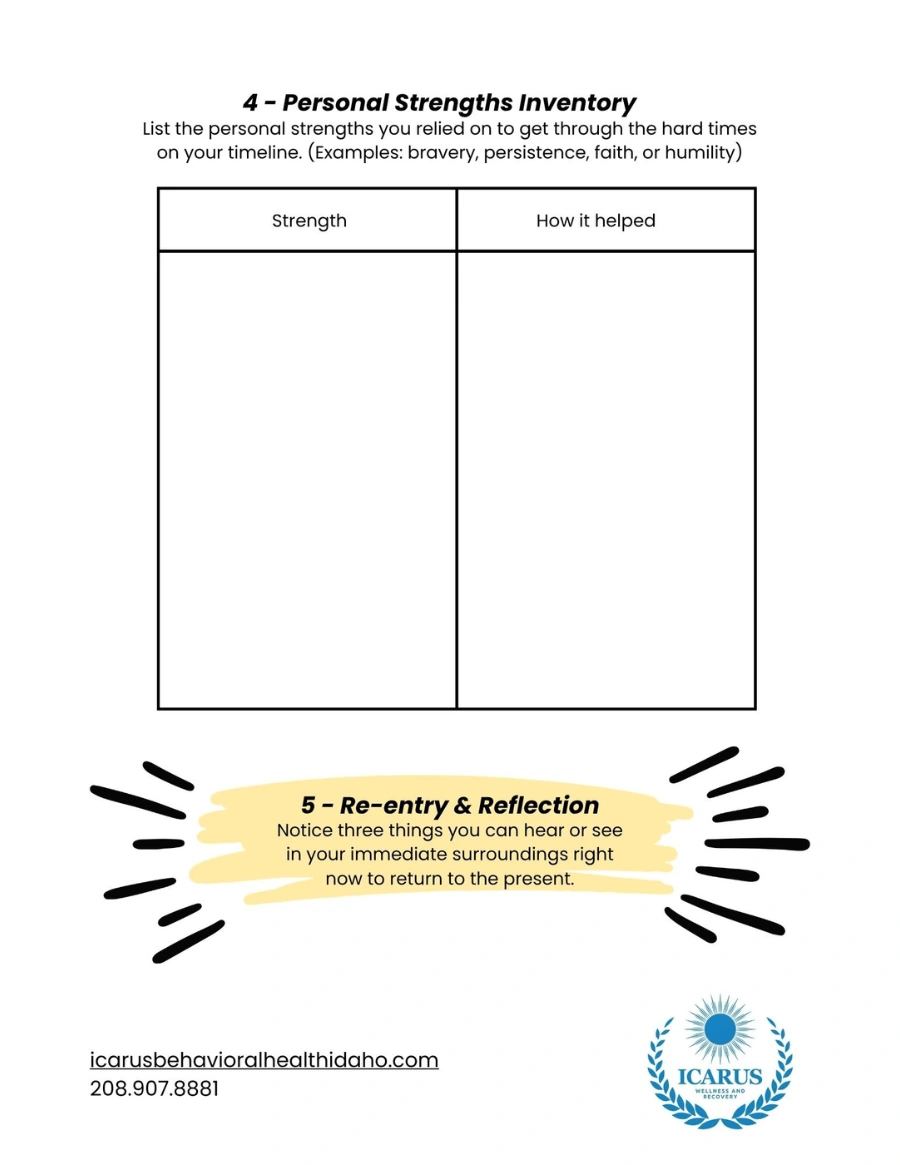
If it feels useful, note a strength, a person, or a resource that supports you now. You do not have to find a positive meaning in what happened or explain how you survived.
You can leave this section blank. Having ongoing symptoms does not mean that you lack strength or are failing at recovery.
Step 5: Reflect and Re-enter the Present After You Explore the Trauma
At the end, check how you feel and what you need next. You might notice a few objects or sounds around you, take a break, or contact someone you trust.
Do not assume that a grounding exercise will prevent distress afterward. If you continue to feel overwhelmed or disconnected, contact your clinician. If you are in immediate danger, seek emergency help.
Get Accredited Treatment Programs at Icarus
Tips for Completing a Trauma Timeline and Narrative Worksheet
Consider these limits before you begin:
- Ask a qualified mental health professional whether this exercise is appropriate for your current needs.
- Choose your own pace and stop if you need to. There is no deadline or required level of detail.
- Plan who you can contact for support. Do not use the worksheet in place of urgent care.
- Keep the completed pages private and secure. You decide whether to share them.
What Can This Worksheet Help You Discuss?

Tedeschi and Calhoun’s 1996 paper developed the 21-item Posttraumatic Growth Inventory, a measure of perceived positive changes following difficult experiences. Its five domains include personal strength, new possibilities, relationships, appreciation of life, and spiritual change. It was a measurement study, not a trial of this timeline worksheet.
In an APA podcast interview, Tedeschi discusses post-traumatic growth. The interview is background information, not evidence that this handout produces growth or treats PTSD. Growth is not guaranteed and can coexist with distress. You do not have to report growth to be recovering.
The following are optional discussion topics, not promised outcomes of completing the PDF.
Track Post-Traumatic Growth
If you notice changes that matter to you, you may choose to record them. The worksheet is not the Posttraumatic Growth Inventory and does not measure recovery or diagnose a condition.
Recognize Your Strengths and Survival Skills
You may wish to discuss coping strategies and support that have helped you. A clinician can help you consider which approaches are useful now.
Document How Past Triggers Connect to Current Stress
You can note reminders or situations that seem connected to distress and ask a clinician about them. A timeline alone cannot establish why a symptom occurs.
Build Self-compassion

If self-blame is troubling you, consider bringing it up in therapy. Completing a worksheet does not guarantee that these feelings will change. You deserve support even if writing is not helpful.
Bridge to Better Communication
You may use a brief note to explain what support you want from a trusted person. Sharing the timeline or a detailed narrative is optional. Consider your privacy and safety before giving someone a copy.
Using Our Expansive Catalog of Support Resources
You can also review the educational worksheets below. Their availability does not establish that they have been validated or are appropriate for every person. Discuss their use with your clinician.
Medicaid and Many Forms of Insurance Accepted
Call to Discuss Trauma Therapy and Find Support at Icarus Today
Our downloadable workbook is an optional educational aid. Ask our team about assessment, clinical fit, and the trauma-related services currently available.
The National Center for PTSD identifies Cognitive Processing Therapy, Prolonged Exposure, and EMDR as trauma-focused treatments with strong research support. That evidence applies to those treatment protocols, not to this PDF. Ask which services and qualified clinicians are available at Icarus (Norman et al., 2025).
Our admissions team can check your specific insurance benefits and discuss self-pay options. Coverage, authorization, and out-of-pocket costs depend on your plan and recommended services.
Call Icarus Wellness and Recovery in Boise, Idaho, today to get the healing you deserve. Your call is free and confidential, so please reach out now for support and assistance.
References
- American Psychological Association. (2019). Transformation after trauma, with Richard Tedeschi, PhD (Episode 96) [Audio podcast episode]. In Speaking of Psychology.
- American Psychological Association. (2025). Clinical practice guideline for the treatment of posttraumatic stress disorder (PTSD) in adults.
- Norman, S., Hamblen, J., & Schnurr, P. P. (2025, November 17). Overview of psychotherapy for PTSD. National Center for PTSD, U.S. Department of Veterans Affairs.
- Sloan, D. M., & Marx, B. P. (2026, August 3). Written exposure therapy for PTSD. National Center for PTSD, U.S. Department of Veterans Affairs.
- Tedeschi, R. G., & Calhoun, L. G. (1996). The Posttraumatic Growth Inventory: Measuring the positive legacy of trauma. Journal of Traumatic Stress, 9(3), 455–471. https://doi.org/10.1002/jts.2490090305