No musical talent is required because the purpose is therapeutic participation, not performance.
Clinical music therapy is distinct from recreational music activities because it includes assessment, individualized goals, planned interventions, and evaluation by a qualified professional.
Why Music Therapy Fits So Well in Substance Abuse Treatment
Substance use disorders can affect reward processing, impulse control, mood, and responses to stress. During early recovery, some people also have difficulty identifying or discussing emotions.
A structured music-based intervention like our offerings at Icarus in Boise provides another way to explore feelings and practice coping skills.
Music engages brain systems involved in attention, emotion, memory, and reward. These observations help researchers develop possible explanations for music therapy, but they do not prove that music can repair addiction-related brain changes or replace established treatment.
Music interventions have been associated with changes in psychological and physiological stress outcomes in varied healthcare populations. Those general findings should not be treated as proof that music therapy controls withdrawal, insomnia, cortisol levels, or other symptoms during substance use treatment.
Within addiction care, music therapy is best described as a possible complement to interventions such as cognitive behavioral therapy, medication-assisted treatment, motivational approaches, and trauma-informed care.
Icarus Wellness and Recovery offers music therapy and art therapy alongside the complementary activities that are available alongside (and incorporated with) our levels of care.
How Music Therapy Supports Addiction Recovery Day to Day
Recovery can involve cravings, difficult emotions, disrupted routines, loneliness, and periods of elevated stress.
For clients who find this the right fit, music therapy provides structured ways to work on some of these concerns.
Withdrawal and medical stabilization. Music therapy is not a substitute for medical withdrawal management. Icarus Idaho does not provide onsite medical detox. People at risk for significant withdrawal may need medical clearance or referral to an appropriate detoxification provider before entering treatment.
Craving management. Research suggests that music therapy added to standard care may reduce craving for some people in treatment. At Icarus Wellness and Recovery, therapists also use guided listening, songwriting, music therapy-specific worksheets, and other structured exercises to help a client notice triggers and rehearse coping responses.
Emotional awareness. We have seen that discussing reactions to music helps some clients identify emotions and connect those same responses with personal experiences or recovery goals.
Grief, trauma, and guilt. Lyrics or songwriting can support emotional expression, though trauma-related work will be paced carefully and coordinated with the broader treatment plan.
Social connection. Group music-making can provide opportunities to communicate, cooperate, and participate with others.
What Are the Core Music Therapy Techniques Used in Rehab Settings?

Substance use disorder music therapy can include receptive, or listening-based, methods and active, or creation-based, methods.
A qualified music therapist selects interventions according to the client’s assessment, goals, preferences, cultural context, and response to music.
Receptive Techniques
Receptive approaches include:
Guided listening for relaxation or emotional exploration
Music selected in relation to a specific treatment goal
Discussion of memories, emotions, cravings, or coping responses associated with a song
Active Techniques
Active approaches include:
Playing accessible instruments or using rhythm
Singing when the client is comfortable doing so
Improvisation to explore thoughts or feelings
Collaborative music-making that supports communication or participation
Instruments and activities can be adapted to a person’s abilities. And remember, advanced musical skill is not required.
Lyric Analysis and Songwriting
Lyric analysis uses songs connected with identity, substance use, recovery, relationships, or other personally relevant themes. In this application and set of activities, the clinician and client discuss whether a selection supports the treatment goal or creates an unhelpful trigger.
Songwriting also offers a structured way to express experiences, examine choices, or identify recovery goals. The form of the activity depends on the client and the clinician rather than on a fixed set of exercises.
Individual vs Group Music Therapy in Addiction Programs
Music therapy may be offered individually or in groups. The available format, group size, frequency, and balance between formats depend on the program, clinician, level of care, and individualized treatment plan.
Individual sessions can focus on personal goals and allow music selections, pacing, and interventions to be tailored to the client’s history, preferences, and responses.
Group sessions may use shared listening, rhythm, songwriting, improvisation, or reflection to support participation and communication. Group activities will be facilitated with attention to consent, cultural differences, sensory needs, and music that could cue cravings or distress.
Neither format is inherently better for every person. A clinical assessment should guide whether individual music therapy, group music therapy, another complementary approach, or no music-based intervention is appropriate.
Are There Proven Benefits of Music Therapy for Substance Use Disorders?

As touched on above, recent research suggests that music therapy may be a useful addition to standard substance use treatment, particularly for craving and motivation for treatment or change.
A 2022 Cochrane review included 21 randomized trials involving 1,984 participants. Compared with standard care alone, music therapy added to standard care produced a moderate reduction in craving and a small-to-moderate improvement in motivation for treatment or change.
Music therapy should therefore be described as a complementary intervention rather than a stand-alone treatment, a guaranteed method of preventing relapse, or a replacement for evidence-based addiction care.
Integrating Music Therapy With Comprehensive Mental Health and Addiction Treatment at Icarus
Icarus Wellness and Recovery provides CAHO-accredited treatment programs for substance use disorders and co-occurring mental health conditions through residential and outpatient levels of care in Idaho.
Treatment planning combines behavioral therapies, psychiatric services, medication when clinically appropriate, recovery support, and complementary activities based on clients’ individual needs and goals.
Who Can Benefit From Music Therapy in Addiction Treatment?
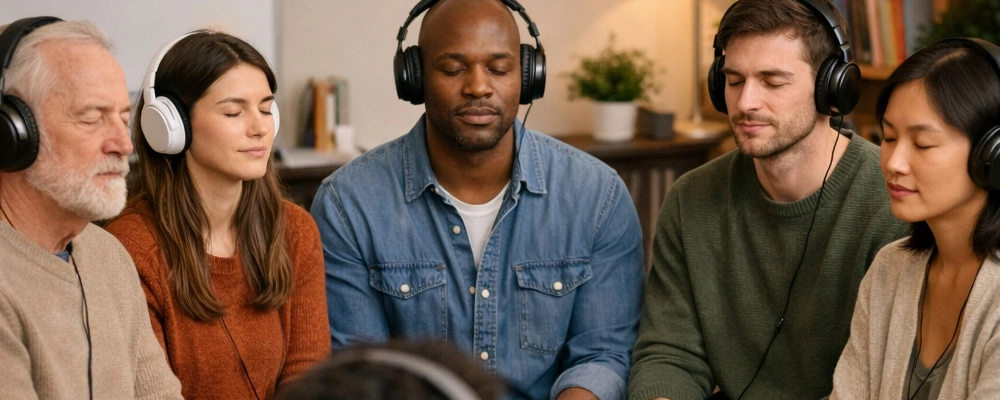
Music therapy may be considered for people who are interested in music-based work and whose clinical needs, preferences, and treatment goals are compatible with the approach. And, as a reminder, prior musical training is not required.
Factors that may affect suitability include:
The person’s interest in and response to music
Whether particular music is associated with substance use, trauma, grief, or other distress
Current psychiatric stability and risk of overstimulation
Sensory needs, hearing considerations, mobility, culture, and communication preferences
Access to a qualified music therapist and integration with the treatment plan
Music therapy can often be adapted by changing the volume, instruments, genre, pace, or degree of active participation.
Is Music Therapy Covered by Insurance?
Insurance coverage for music therapy is plan-specific and may depend on the provider, service, diagnosis, medical necessity, network status, and authorization requirements.
Icarus Wellness and Recovery accepts Magellan and other forms of Idaho Medicaid alongside many forms of commercial insurance, and coverage for any particular service can be verified before admission.
FAQs About Music Therapy for Addiction Treatment
These questions address practical and emotional concerns that come up often for people considering music therapy as part of their recovery.
Can music therapy trigger cravings or flashbacks related to my substance use?
Yes. Music can evoke memories, emotions, and conditioned associations with past substance use. The effect depends on the person and the specific music.
A qualified clinician should assess these reactions and adjust or stop an intervention if it increases craving or destabilizing distress. People should ask Icarus how musical triggers are evaluated within any currently available service.
Do I have to share my personal music or sing in front of others?

You do not need musical training or performance experience. Depending on the session format and treatment goals, participation might involve listening, discussing lyrics, using simple instruments, writing, or remaining primarily reflective.
Preferences and boundaries should be discussed with the clinician. Ask the program how participation choices are handled within individual and group sessions.
How quickly will I notice benefits from music therapy?
There is no reliable timetable. Some people may notice short-term changes in relaxation, expression, or engagement, while others may not find the approach useful.
The strongest review evidence concerns craving and motivation for treatment or change, not a guaranteed improvement in mood or long-term recovery. Progress depends on the person, the intervention, the number of sessions, and the rest of the treatment plan.
Is music therapy safe for people with severe mental health conditions?
Music therapy may be appropriate for some people with serious mental health conditions, but suitability requires an individualized clinical assessment. Music can be overstimulating or destabilizing for some people, particularly during periods of acute psychiatric instability.
The treatment team should consider current symptoms, sensory needs, risks, and the clinician’s qualifications. Music therapy is not a substitute for psychiatric evaluation, medication management, crisis stabilization, or other indicated care.
Can family members be involved in music therapy sessions?
Family involvement may be considered when it is clinically appropriate, available within the program, and supported by the client’s informed consent. Possible activities depend on the treatment goal and the clinician.
Ask the treatment team whether family-inclusive music therapy is currently offered. Family participation should not be promised before program availability and clinical appropriateness are confirmed.
References
- American Music Therapy Association. (n.d.). What is music therapy?
- American Music Therapy Association. (n.d.). What you need to be a music therapist.
- Dingle, G. A., Kelly, P. J., Flynn, L. M., & Baker, F. A. (2015). The influence of music on emotions and cravings in clients in addiction treatment: A study of two clinical samples. The Arts in Psychotherapy, 45, 18–25.
- Ghetti, C., Chen, X.-J., Brenner, A. K., Hakvoort, L. G., Lien, L., Fachner, J., & Gold, C. (2022). Music therapy for people with substance use disorders. Cochrane Database of Systematic Reviews, 2022(5), Article CD012576.
- Ghetti, C. M., Hjelmbrekke, S., Morken, K., & Stige, B. (2024). Steering the energy with music: Hermeneutic phenomenological study of user perspectives of music and music therapy for co-occurring ADHD and substance use problems. Substance Abuse Treatment, Prevention, and Policy, 19, Article 10.
- Short, A. D. L., & Dingle, G. A. (2016). Music as an auditory cue for emotions and cravings in adults with substance use disorders. Psychology of Music, 44(3), 559–573.
- Silverman, M. J., Bourdaghs, S., Abbazio, J., & Riegelman, A. (2023). A systematic review of music-induced substance craving. Musicae Scientiae, 27(1).